
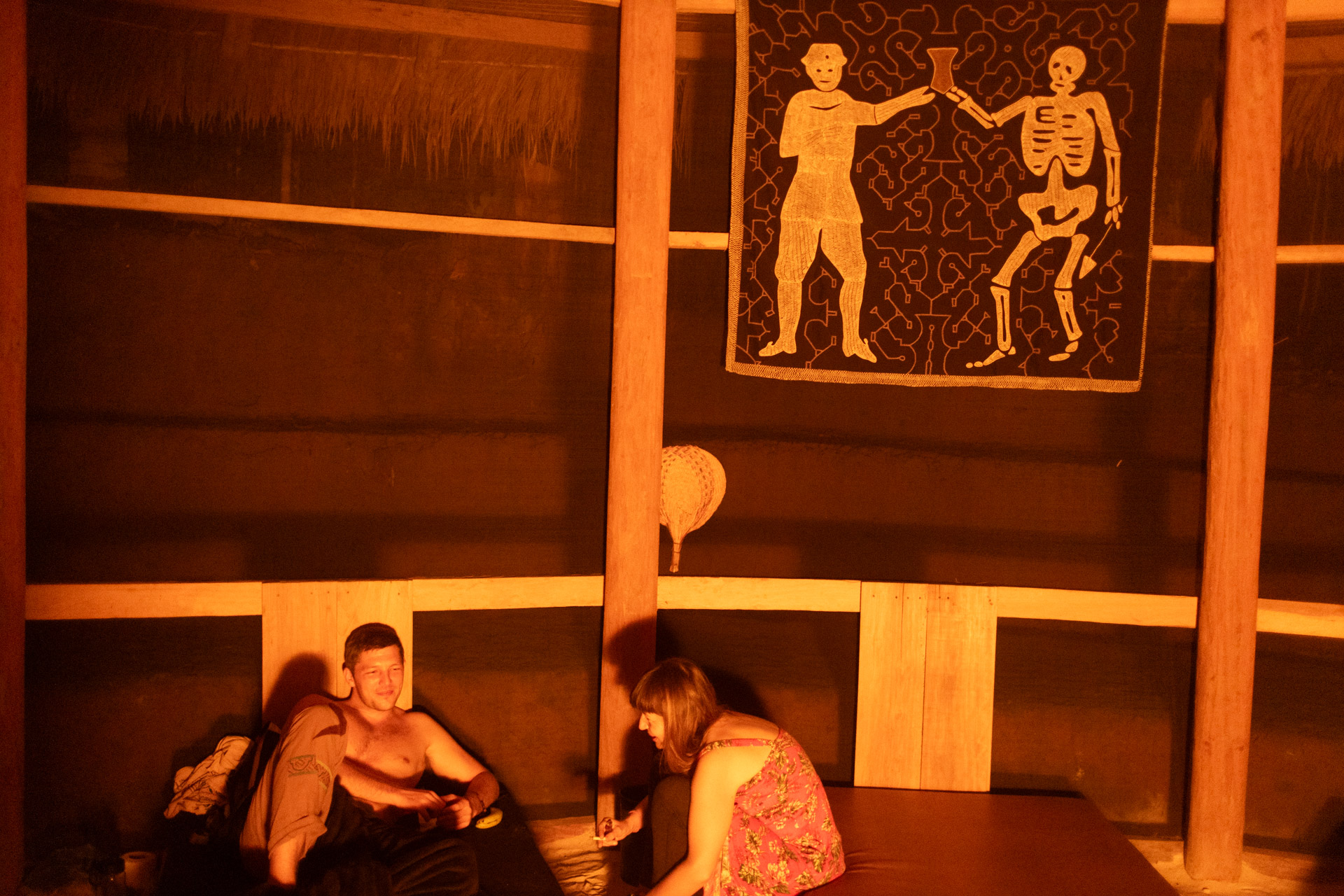
Why, they ask, you keep drinking ayahuasca, if you fail at living by the lessons shown?
And why do you keep practicing yoga if eventually your body weakens and stiffens despite all effort?
What if the drink of the vine of death is really a taste of impermanence, direct, intense experience of it, when in one night we can go from hell to heaven, with death experience on the way, and then realize that even that profound understanding we got is impermanent itself, because hours ago we knew that the only thing that matters is life itself, when we were about to loose it, and now despite getting it back, we are angry again because our neighbour in the ceremony is snoring.
Should we be now angry at ourselves, that we forget so quickly, angry at the medicine that it failed to permanently fix us, angry at the world for the way it is? Isn’t that attitude of a child, dropping the toy because something didn’t go just as expected. Should the toy be blamed or game continued, until we progress another bit. Abandon attachment to results and surrender to the dance with impermanence itself, not expecting much but what you are given, a bit more you ve learned, extending of that glimpse of understanding.
Tulku Urgyen Rinpoche says :
“In Dzogchen practice, as I have mentioned, one of the key points is ‘short moments, repeated many times.’ With short moments we do not become too tired during practice. Not practicing short moments, many times; but trying to sustain a continuous state is a form of attachment. It is not the same as mundane attachment that we leave behind during our meditation. Instead there is attachment to the ‘taste’ of the view, the feel of it. We fear it will slip through our fingers, fall apart, or disappear because of our distraction. To counteract that, we hold the notion of the view and try to maintain the state continuously. That is still attachment and attachment is what makes samsara survive.”