
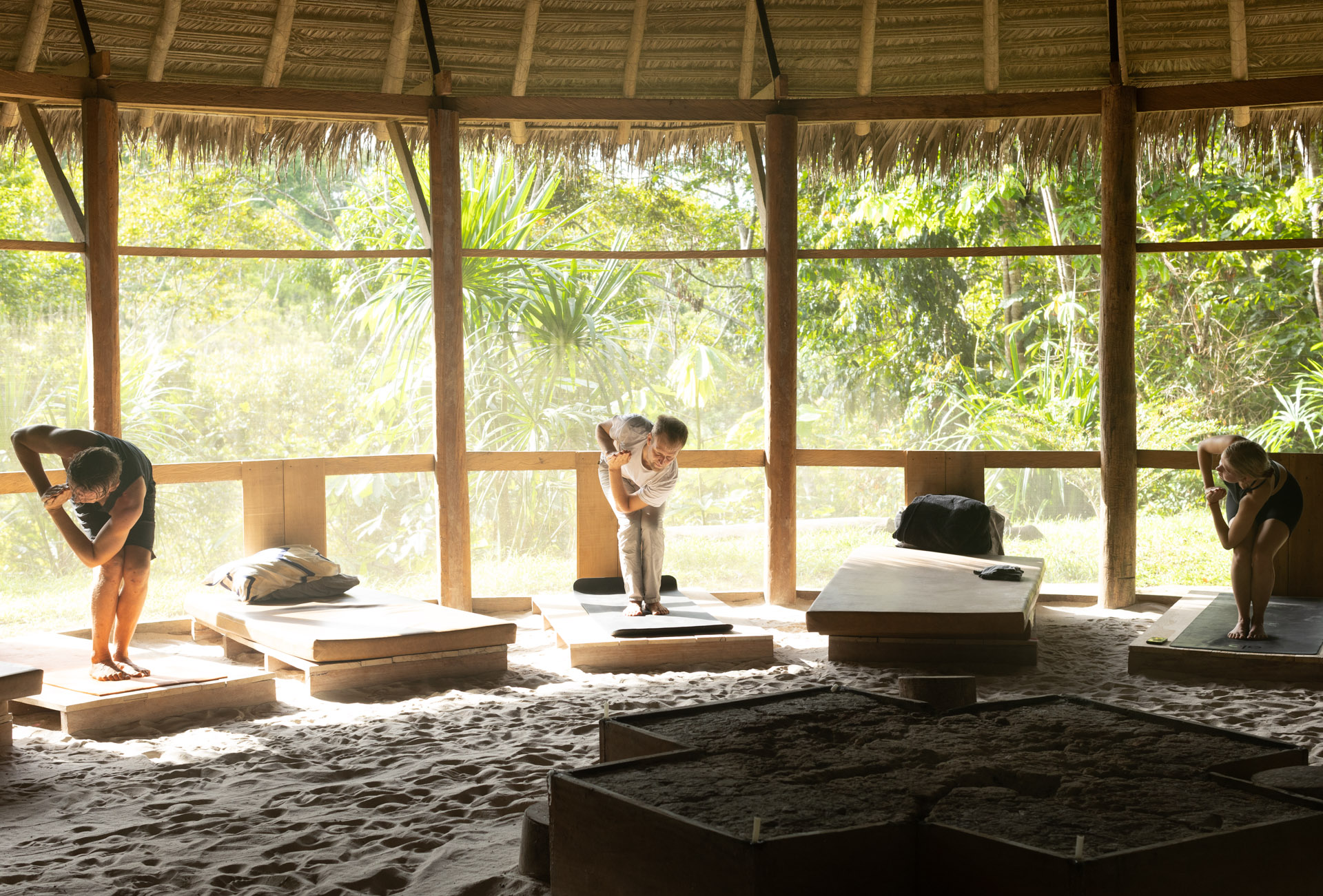
As I struggled again in a sweaty session after a very long break from yoga, among many thoughts obviously distracting me from my handicap, this one came : I would not dare to hide behind some diagnosis – I am not suffering from some mysterious illness called treatment resistant rigidness neither I am disyogic. I must be honest to admit, this is nothing but a lack of practice and can be remedied by nothing but practice. Obviously there are some younger, some naturally more flexible, and on the contrary, some whose limitations are dictated by injury, that could / need be entirely or partially fixed by operation or quasi medical intervention such as massage. But will even the best Thai massage turn someone into a flexible yogi?
Why do we then allow such narrative about distracted, unfocused, untrained mind? Of course, there are some who suffer from neurological injury or permanent handicap, but in vast majority of cases, when we hide individuals behind diagnosis of anxieties, ADHD, depression, we do them disservice, supporting and reifying their illusion – allowing them to turn into passive victims with no agency, but rather at mercy of fate which throws at them depression as it would throw on that “once a year yogi” mysterious neck pains and spells preventing him from bending to pick up fork that fell on the floor.
Nobody says the training of the mind is easy. Nobody says we start from the same level, have the same circumstances, same obstacles to overcome. Nobody should rush that training or ridicule someone for not starting it or not advancing fast enough.
That training is not just ayahuasca sessions, not just vipassana retreats. It is doing the effort of conserving, directing and managing attention against the world of social media and constant triggering of desires. These are attempts at staying humble, at wanting less, at practicing kindness, and so slowing the mind agitation. Conscious diet, wholesome actions, practice of healthy relationships, bending one’s ego in a conflict, opportunities for mental yoga are countless and daily, and though no one should promise you bending spoons with your mind will any time soon, you will progress as a consequence of your work, and in proportion, and to approach it like this seems more encouraging, more cheerful, with better prospects than zero-or-all “I either fix my anxiety/depression and stop being sick or I am doomed”.
When I perceive my flexibility or rather lack of it, I recognize with gratitude that it could have been worse, but I am not resentful that it is not better. It is up to me after all, so no complaints accepted.